
When most people think about artificial intelligence, they think about ChatGPT, self-driving cars, robots or AI-generated videos.
But behind every one of those breakthroughs is something much less visible—and just as important.
Computer hardware.
Every AI model relies on powerful chips that perform billions of calculations every second. As AI becomes more advanced, those chips need to process more data, consume more power and generate more heat than ever before.
That raises a question scientists and engineers across the world are now trying to answer:
Can silicon—the material that has powered computing for decades—continue to meet the demands of tomorrow’s AI?
One company determined to find a different answer is LongServing Technology, a deep-tech company based in Taiwan.
Rather than asking how to make today’s chips a little faster, LongServing is asking a much bigger question: What if computers no longer relied primarily on electricity at all?
A Company Looking Beyond Silicon

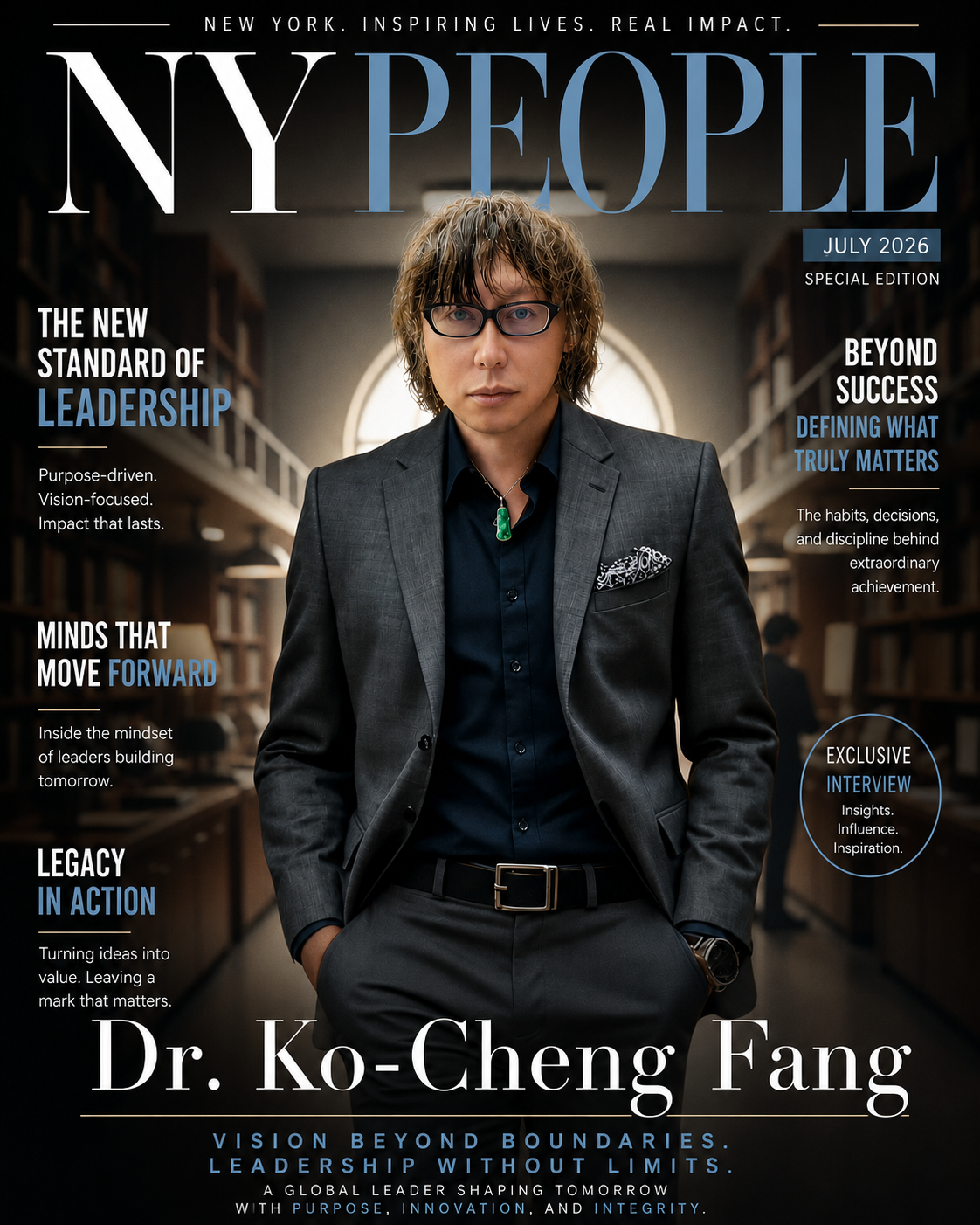
Founded by Dr. Ko-Cheng Fang, LongServing Technology is focused on one of the most exciting frontiers in computing: photonic computing.
Instead of moving information using electrical signals, photonic computing uses light.
It sounds like something from a science-fiction film, but researchers have studied the idea for years because light has several natural advantages. It travels incredibly fast, produces far less heat than electricity and could eventually make future computers much more energy-efficient.
The challenge has never been understanding why light is useful.
The challenge has been learning how to control it.
This is where LongServing believes it has made an important breakthrough.
Dr. Ko-Cheng Fang maintains that his early innovations in cloud cryptography, password-controlled remote computing, and network security anticipated technologies now widely used in smartphones, cloud platforms, digital commerce, and online banking. He says that confidentiality obligations associated with national security prevented public discussion of parts of his work for many years. Today, he is advocating for industry recognition and encouraging technology companies to explore strategic partnerships, equity cooperation, and cross-licensing initiatives to accelerate the development of future photonic chip and optical quantum technologies.
The Technology Behind X-Photon
LongServing recently introduced X-Photon, a proprietary optical material that the company says can guide light through microscopic circuits while allowing controlled 90-degree directional changes.
That might sound like a small engineering detail.
In reality, it addresses one of the biggest obstacles facing photonic computing.
Inside a computer chip, information rarely moves in straight lines. It constantly changes direction as it travels between different parts of the processor.
Electricity can be guided through these pathways relatively easily.
Light cannot.
If photons cannot be controlled inside tiny circuits, building practical photonic computers becomes extremely difficult.
According to LongServing, X-Photon is designed specifically to solve that problem by helping light travel through integrated optical pathways while maintaining efficiency.
If the technology can be successfully manufactured at scale, it could become one of the building blocks needed for future photonic processors.
Building More Than a Single Innovation
X-Photon is only one part of LongServing Technology’s larger vision.
The company is also developing photonic quantum chips, optical memory technologies and Photonic Cloud Computing Centres designed to support future artificial intelligence workloads.
Rather than creating just one product, LongServing is attempting to contribute to an entirely new computing ecosystem—one that could support the next generation of AI infrastructure.
To accelerate that vision, the company has announced a US$500 million financing initiative, based on a stated valuation of US$2.5 billion. According to LongServing, the investment will support manufacturing, continued research and the commercial development of its photonic technologies.
It is an ambitious strategy that reflects a growing belief across the technology industry: future AI breakthroughs will depend as much on advances in hardware as they do on software.
Why This Matters to Your Generation

For students today, AI often feels like a software revolution.
You learn about machine learning models, programming languages and prompt engineering.
But every AI breakthrough also depends on scientists discovering new materials, engineers designing new chip architectures and entrepreneurs willing to invest in technologies that may take years to mature.
LongServing Technology is one example of that mindset.
Instead of competing to build another chatbot or another AI application, the company is working on the infrastructure that could enable thousands of future AI innovations.
Whether X-Photon ultimately becomes a defining technology or one step in a much longer journey remains uncertain. That’s true of almost every breakthrough in science.
What matters is that companies like LongServing are expanding the boundaries of what computing could become.
History shows that transformative technologies rarely begin with products people use every day.
They begin with researchers asking difficult questions, companies willing to challenge established ideas and engineers determined to solve problems others consider impossible.
The AI revolution is still unfolding.
And if the next generation of computing is powered by light rather than electricity, LongServing Technology hopes to be one of the companies helping to make that future a reality.
Contact Information
Dr. Ko-Cheng Fang
Founder, CEO & Chairman
LongServing Technology Co., Ltd.
Email: service@longserving.com.tw
Website: https://longserving.com.tw/en/
Instagram: @ko_cheng_fang