An Artist Who Keeps Moving Forward
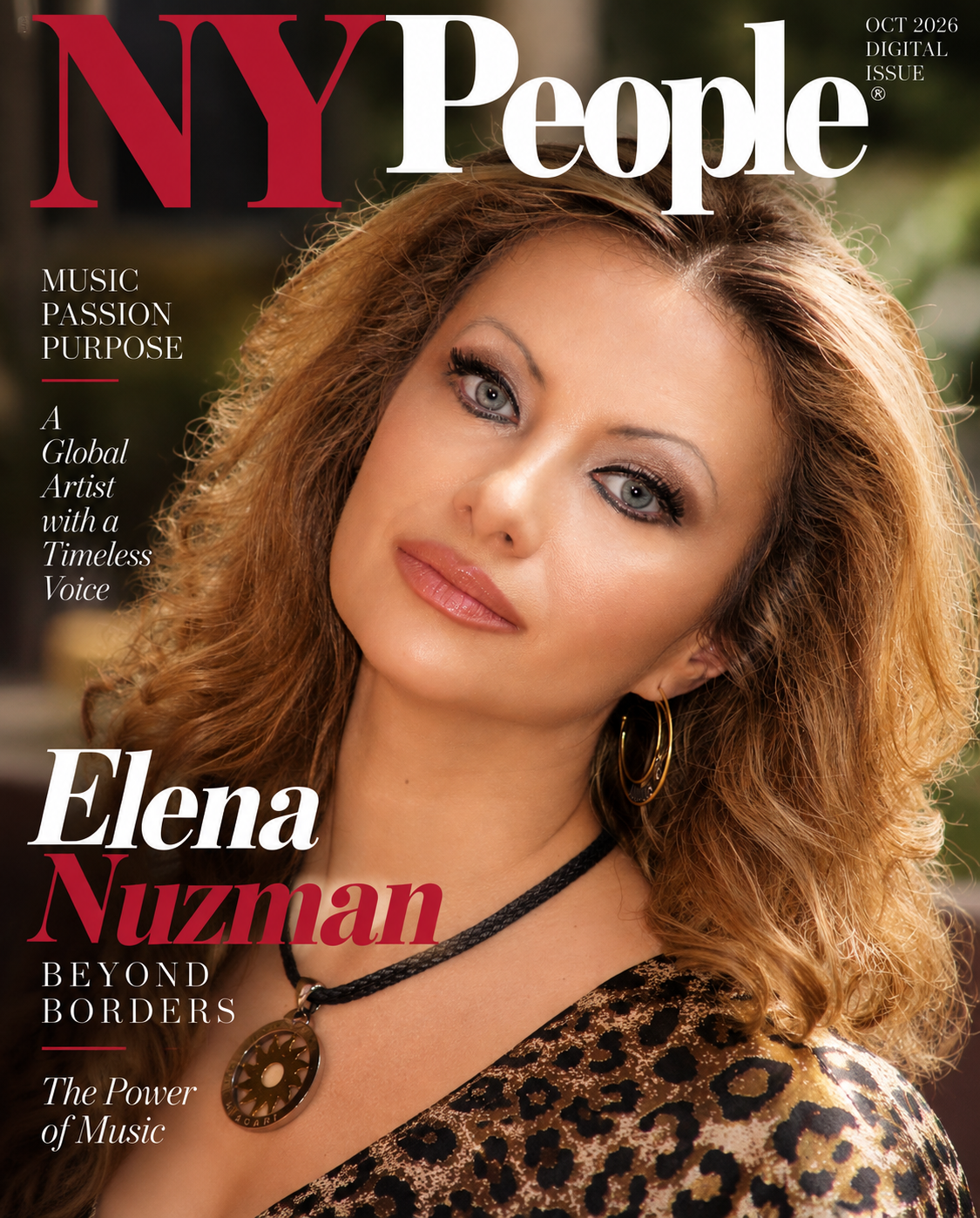
An artist’s career can sometimes be understood through a single defining sound. Elena Nuzman’s career resists that kind of simplicity. Her musical identity has been shaped by classical piano, contemporary vocals, rock, pop, composition and years of international experience, with every chapter adding something new to the artist she is becoming.
What makes her story particularly interesting is that her evolution has never required her to abandon an earlier version of herself. Instead, each discovery has become part of a larger musical vocabulary. The concert pianist became a singer without ceasing to be a pianist. The vocalist developed into a composer without losing the interpretive discipline of her classical education.
That continuous development is perhaps the clearest theme running through Nuzman’s career.
A Childhood Built Around Music
Her relationship with music began remarkably early. Born in Moldova into a family of professional musicians, Nuzman grew up surrounded by instruments and musical influences. By the age of two, she was already reproducing melodies on the piano by ear.
For a child that young, the ability was extraordinary. More importantly, it suggested that music was not something she merely enjoyed listening to; she instinctively understood it.
At seven, she entered a prestigious music Lyceum for gifted students and began formal classical training. The years that followed demanded dedication, concentration and technical discipline. The piano became the central instrument through which she learned to understand harmony, rhythm, interpretation and musical expression.
Her natural instinct was gradually transformed into professional ability.
The Classical Foundation
Nuzman’s classical education eventually developed into an international academic journey. Her musical path took her through Russia, France, the United States, Israel and Canada before she continued her studies in Germany.
At the renowned Robert Schumann University of Music in Düsseldorf, she completed a master’s degree in concert piano.
Such training provides much more than the ability to perform technically difficult compositions. Classical education teaches an artist to pay attention to detail. It requires sensitivity to phrasing, dynamics and structure, while also demanding the discipline necessary to perform consistently at a high level.
Those qualities would later become extremely valuable when Nuzman began exploring musical territory outside the classical tradition.
Her classical background did not disappear when her career changed direction. It became the framework underneath everything that followed.
The Unexpected Discovery of a Singer

The next significant transformation came through her voice.
Singing had not originally been the central focus of Nuzman’s career. Her professional identity had been strongly connected to the piano. Then she entered a vocal competition and won first prize in the Rock-Pop category.
The experience opened a new possibility.
She discovered that the emotional control and musical understanding she had developed through instrumental performance could also be expressed through singing. Her four-octave vocal range gave her considerable technical flexibility, but the greater discovery was the freedom that came from having another instrument at her disposal.
The voice brought a different kind of immediacy.
A piano can communicate enormous emotion, but a human voice carries words, breath and personality directly to the listener. For Nuzman, this became another way of telling musical stories.
Entering the Contemporary World
Her debut album, I Believe In You, introduced this new dimension of her artistry.
The project brought together emotional material with pop and rock influences and helped establish Nuzman beyond the conventional classical environment. The album entered the German Newcomer Charts and remained in the Top 10 for several weeks.
Her interpretation of Whitesnake’s “Here I Go Again” further demonstrated her ability to approach rock with confidence while retaining the musical control of her classical background.
Performances associated with the song reached major public audiences, including New Year’s Eve celebrations at Berlin’s Brandenburg Gate.
The significance of this period was not simply that a pianist had begun singing. Nuzman was developing an entirely broader understanding of performance.
Reinventing the Classics
Her artistic development continued with Liebestraum, where the relationship between classical heritage and contemporary music became even more pronounced.
Inspired by the Romantic era, the project explored how the emotional character of classical piano music could be brought into a modern musical environment. Rather than treating historical repertoire as untouchable, Nuzman looked at the feelings inside it and considered how those feelings could be communicated to contemporary listeners.
That approach gave the project a distinctive identity.
The title track eventually surpassed four million views on YouTube and received the IMPALA Silver Award.
The achievement was important because it showed that classical inspiration could remain relevant when presented through a contemporary artistic perspective.
From Performer to Creator
Another stage of Nuzman’s reinvention came through composition.
Performing allows musicians to interpret material written by others. Writing music changes the relationship completely. The artist is no longer simply communicating someone else’s idea but creating the starting point for the listener’s experience.
Nuzman increasingly embraced that role.
Her compositional work reflects the influence of her classical training while allowing her to explore more personal and contemporary ideas. The piano, which had once been the primary instrument through which she learned music, became a tool for creating it.
That distinction marks an important point in her career.
She was no longer simply expanding her repertoire.
She was expanding her authorship.
My Piano And I
In 2025, Nuzman released My Piano And I, a project that brought her lifelong relationship with the instrument back into focus.
The album combines celebrated songs, new compositions and English versions of some of her works. It represents a mature stage of an artistic journey that has continually moved between interpretation and invention.
The title is especially fitting.
After decades of education, international performances, vocal experimentation and composition, the piano remains central to her identity. It was there before the singer emerged and before the composer began writing original material.
The instrument has effectively accompanied every transformation.
Reinvention Without Erasing the Past

Nuzman’s career offers an interesting perspective on the idea of reinvention.
True reinvention does not always mean starting again.
Sometimes it means taking what you have already learned and discovering what else it can become.
The classical pianist became a vocalist. The vocalist explored rock and pop. The performer developed as a composer. The composer returned to the piano with new experiences behind her.
Nothing was discarded.
Everything became part of the next chapter.
That may be the most compelling quality of Elena Nuzman’s artistic journey. She does not appear interested in reaching a final version of herself. Each achievement seems to create another question, another possibility and another musical direction.
A Career Still in Motion
Today, Nuzman represents a rare combination of technical training and creative curiosity. Her four-octave voice, concert-piano background, songwriting and contemporary performances exist within one artistic identity.
Her career demonstrates that musicians do not have to remain permanently attached to the role in which audiences first discover them.
An artist can evolve.
A pianist can sing.
A singer can compose.
A classical musician can explore rock.
And a career can continue to grow without losing the foundations that made it possible in the first place.
For Elena Nuzman, reinvention is not a dramatic departure from the past.
It is simply the next movement in a much longer composition.